|
Matthew L. C. Boyle
Music Theorist |
[ Home ] |
[ Curriculum Vitae ] |
[ Research ] |
[ Teaching ] |
[ Links ] |
| Example 1 “Bell’alme generose,” mm. 31–32, from Act 2 of Rossini’s Elisabetta, regina d’Inghilterra (1815) |
|
| Example 3 “No, che il morir non è,” mm. 83–103, from Act 2 of Rossini’s Tancredi |
|
Example 4 |
|
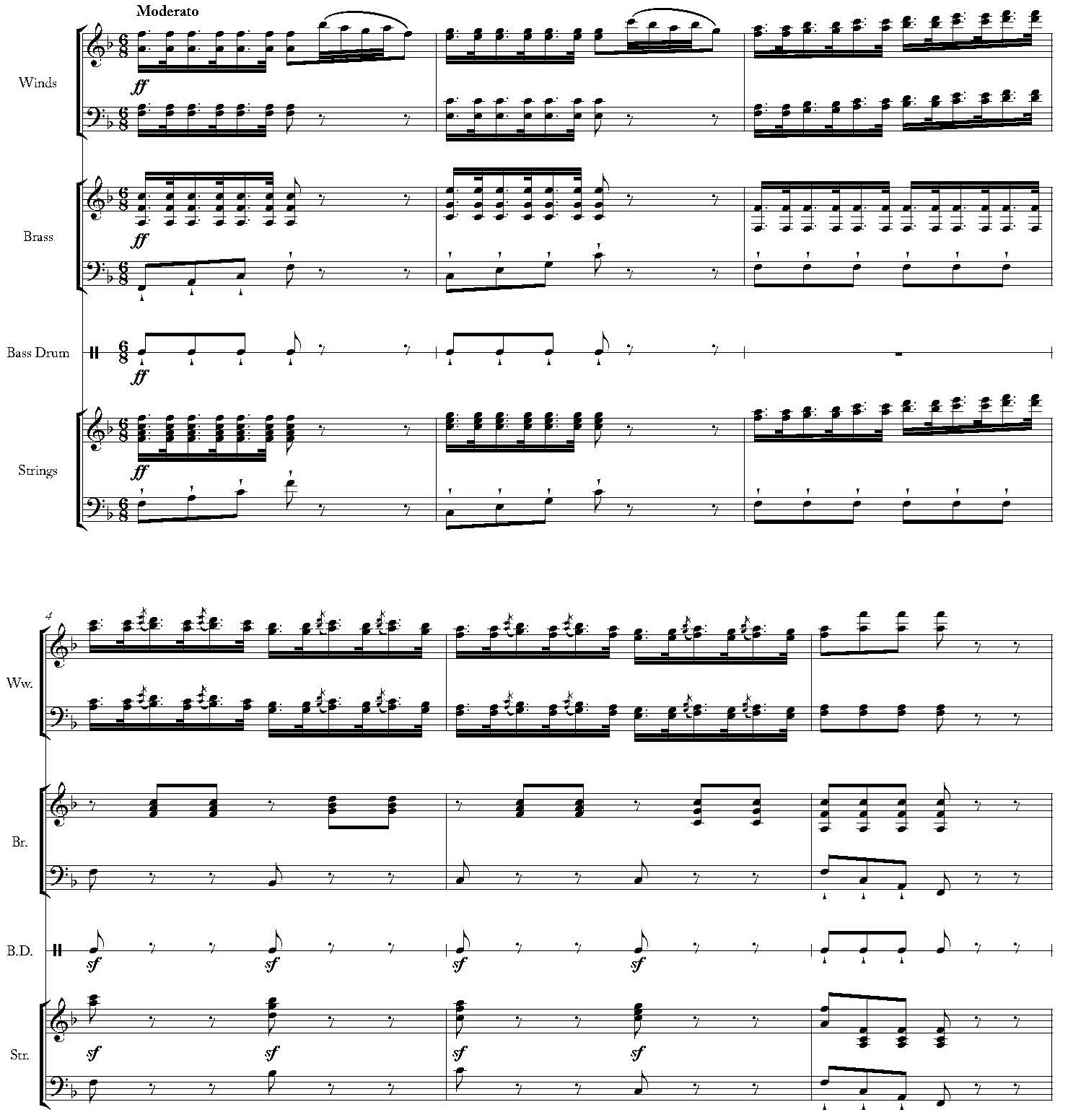
| Example 5 “Tocchiamo, beviamo,” mm. 1–6, from Act 1 of Rossini’s La gazza ladra |
The complete Example 5
| Example 7a Exaggerated /r/ in “Questo è un nodo avviluppato,” from Act 2 sextet of Rossini’s La Cenerentola, mm. 10–16 |
|
| Example 7b Exaggerated /r/ in “Questo è un nodo avviluppato,” from Act 2 sextet of Rossini’s La Cenerentola, m. 19 |
|
| Example 7c Exaggerated /r/ in “Questo è un nodo avviluppato,” from Act 2 sextet of Rossini’s La Cenerentola, mm. 29–32 |
|
| Excerpt from Jean-Pierre Ponnelle and Claudio Abbado’s 1981 film adaptation of La Cenerentola which prominently emphasizes the /r/ phoneme. | |
| Example 8 Planed dominant-seventh sonorities in “Tra tante smanie,” mm. 328–35, from Act 2 of Rossini’s Otello |
|
| Example 9a “Mille grazie,” from Act 1 introduction of Rossini’s Il barbiere di Siviglia, mm. 1–5 |
|
| Example 9b “Mille grazie,” from Act 1 introduction of Rossini’s Il barbiere di Siviglia, mm. 19–22 |
|
| Example 9c “Mille grazie,” from Act 1 introduction of Rossini’s Il barbiere di Siviglia, mm. 43–51 |
|
| Example 10 “O quante lagrime,” from Act 1 of Rossini’s La donna del lago, mm. 43–51 |
|
| Example 12 “Giuri ognuno a’ sommi dèi,” Act 1 of Rossini’s Semiramide, mm. 1–27 |
Example 16 J. Haydn, Symphony No. 88, fourth movement, mm. 1–12 |
| The Hampster Dance | |
| Nyan Cat | > |